
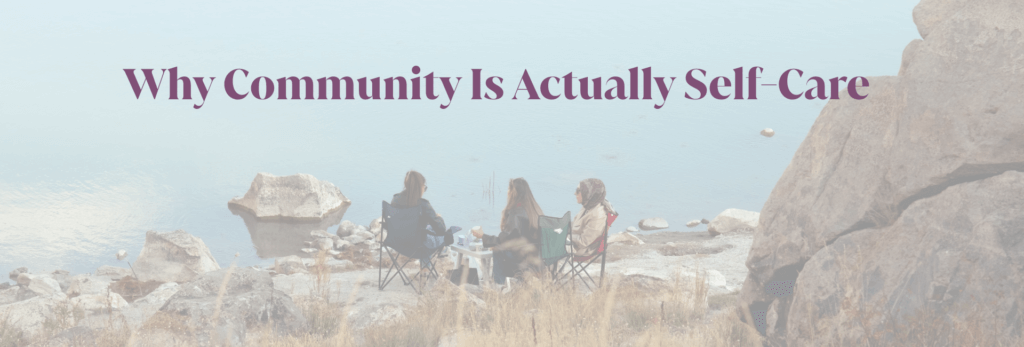
Here’s something nobody tells you about self-love: sometimes it happens in the presence of other people.
I know, I know. We’re sold this image of self-love as this solitary journey of journaling and meditation and figuring everything out alone. And while those things have their place, real self-love also includes the radical act of letting other people care about you.
Your Brain Needs Other Humans
Let’s get nerdy for a second. Humans are literally wired for connection. Our brains have specialized neurons called mirror neurons that help us understand and empathize with others. We’re one of the most social species on the planet, and our nervous systems actually regulate each other through a process called co-regulation.
When you spend time with people who make you feel safe and valued, your body produces oxytocin—the “bonding hormone” that reduces stress and promotes feelings of trust and connection. Your cortisol levels drop. Your heart rate variability improves (a marker of nervous system health and resilience).
The Harvard Study of Adult Development, one of the longest-running studies on happiness, found that the quality of our relationships is the strongest predictor of our health and happiness over time. Stronger than money, fame, or even genetics.
Connection isn’t just nice to have. It’s essential.
Community as Self-Love
So what does this have to do with self-love? Everything.
Choosing to spend time with friends—really showing up, being present, letting yourself be seen—is an act of self-love. You’re saying: “I am worthy of connection. I am worthy of being known. I deserve to have people in my life who actually care about me.”
It’s self-love to reach out when you’re struggling instead of isolating. To ask for support instead of pretending you’re fine. To celebrate your wins with people who genuinely cheer for you, not just tolerate your success.
Research shows that social connection strengthens your immune system, improves cognitive function, and even increases longevity. People with strong social ties have a 50% increased likelihood of survival compared to those with weak social connections. That’s comparable to the risk associated with smoking 15 cigarettes a day.
The Permission to Need People
Here’s what self-love actually looks like: admitting you need people. Not in a codependent “I can’t function without you” way, but in a healthy “humans need humans” way.
It’s showing up for coffee dates even when you’re busy. It’s sending the text that says “thinking of you.” It’s being honest about what’s really going on instead of defaulting to “I’m fine.”
It’s also setting boundaries with people who drain you. Self-love means protecting your energy by choosing relationships that add to your life, not deplete it. Sometimes love means saying no to gatherings that don’t serve you and yes to the ones that do.
Quality Over Everything
You don’t need a massive friend group to experience the benefits of connection. Research actually shows that the quality of relationships matters far more than quantity. A few deep, authentic friendships will serve you better than dozens of surface-level acquaintances.
Self-love is nurturing those connections. Making time for the people who matter. Being the kind of friend you’d want to have.
Start Where You Are
Maybe self-love looks like texting a friend you’ve been meaning to catch up with. Maybe it’s saying yes to that invitation instead of canceling. Maybe it’s joining a group or class where you might meet like-minded people.
Because loving yourself includes believing you’re worthy of belonging. Worthy of being known. Worthy of showing up as your whole, imperfect, beautifully human self.
You don’t have to do this alone. In fact, you’re not meant to.