
Last time, we met your pelvic floor: the hammock of muscle holding up your bladder, uterus, and bowel while quietly running support, stability, and sexual function behind the scenes. We practiced finding it, and just as important, letting it go. Now let’s put it to work.
It’s Not Just Kegels (Promise)
Kegels got famous for a reason, but squeezing on repeat is only one piece of the story. Your pelvic floor needs what every muscle needs: strength, endurance, speed, and a full release. Here’s a simple starting point:
- Endurance holds: On an exhale, gently lift (hello again, blueberry). Hold 5 to 10 seconds while you keep breathing. Then fully release for the same amount of time. Aim for about 10.
- Quick flicks: Fast squeeze, fast release, 10 in a row. These train the reflex that saves you during a sneeze, laugh, or jump.
- Take it into movement: Your pelvic floor works best as part of a team. Pair that exhale-and-lift with bridges, sit-to-stands, and squats.
The release matters as much as the squeeze. If you found last time that you’re a clencher, start with relaxation and let a pelvic floor PT tell you when to add strength.
How to Brace During Strength Training
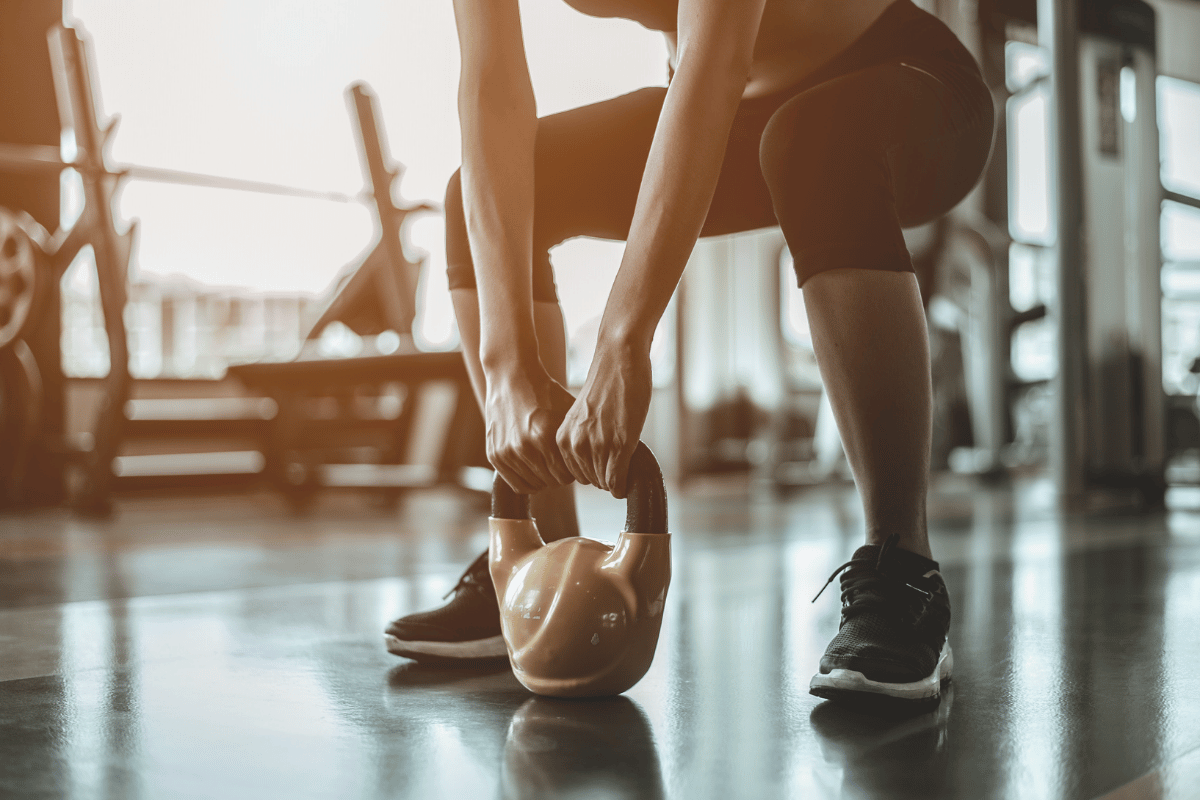
This is where the secret sauce lives. Every time you lift something heavy, pressure builds inside your core canister. Your job is to manage that pressure so it doesn’t push down on your pelvic floor.
- Stack up. Ribs over pelvis, not flared up or tucked under.
- Breathe 360. Inhale into your belly, sides, and back. Let your pelvic floor soften.
- Exhale on the effort. As you start the hard part of the lift, exhale through pursed lips and feel your pelvic floor and deep core lift and snug in, like a corset zipping from the bottom up.
- Keep breathing. For most reps, you don’t need to hold your breath. Breath-holding for very heavy lifts is a tool you can build toward, not a starting point.
Now watch for signals: leaking, heaviness or a bulging feeling, or a ridge doming down the middle of your belly. That’s not a stop sign forever. It’s information. Lighten the load, adjust your breath, and get some expert eyes on it.
Meet Michelle
Michelle, 55, quit deadlifts because she leaked every time. She dropped her weight by half, learned to exhale and lift through each rep, and built back up over three months. She’s now lifting more than she did before, and dry.
Why Pelvic Floor PT Should Be on Your Team
Here’s the truth: you can’t see your pelvic floor, and guessing is how women end up doing the wrong exercise for years. A pelvic floor physical therapist can assess whether your muscles are weak, tight, uncoordinated, or a mix, and build a plan for your body. Many use biofeedback, hands-on work, and exercise tailored to you. In France, pelvic floor rehab after childbirth is routinely covered by national health care. Here, most of us were sent home with “do your Kegels.” We deserve better. Find one through APTA Pelvic Health (aptapelvichealth.org) or the Herman & Wallace directory (pelvicrehab.com), and check your insurance, since PT is often covered.
What About Visceral Manipulation?
Visceral manipulation is a gentle, hands-on technique developed by French osteopath and physical therapist Jean-Pierre Barral. It focuses on your organs and the connective tissue that holds them in place. The idea: scar tissue from a C-section or hysterectomy, endometriosis, or chronic constipation can create restrictions that tug on your pelvic structures. Many women find it helpful alongside pelvic floor PT. To be honest with you, the research is still emerging, so think of it as a complement to evidence-based care with a licensed provider, not a replacement.
The Whole Point
Your pelvic floor isn’t something to be embarrassed about. It’s the foundation of your power, in the gym and in life. Notice it. Train it. Let it rest. And when something’s off, realign with the right help instead of just living with it.