
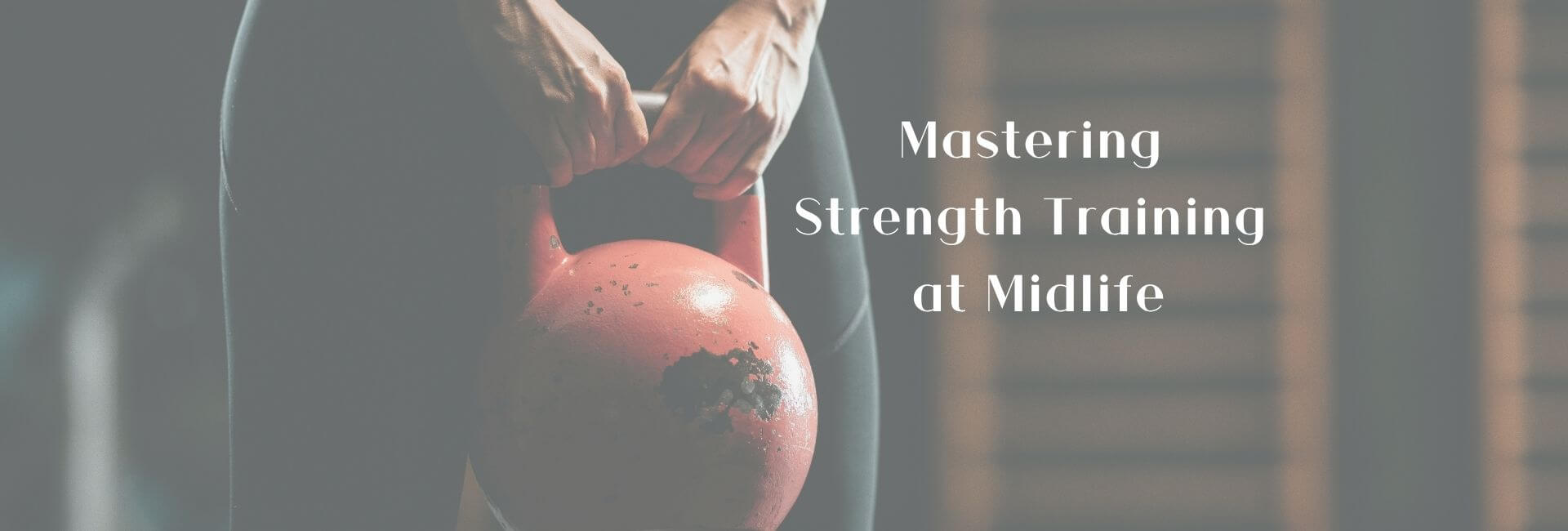
Complete Guide to Strength Training in Midlife
Welcome back to our October series on building an effective midlife exercise program. Last week, we explored why exercise matters more than ever as we age. This week, we’re diving deep into the most important component of your fitness program: strength training.
If you could only do one type of exercise (please don’t!), this would be it. Let me show you why and how to do it effectively.
Why Strength Training Is Non-Negotiable
Strength training is the closest thing we have to an anti-aging pill. The research is unequivocal: resistance training reverses many of the physical declines we associate with aging.
The Muscle Loss Problem After age 30, adults lose 3-8% of their muscle mass per decade. This accelerates to 5-10% per decade after age 50. By age 70, the average person has lost 25-30% of their peak muscle mass. This loss, called sarcopenia, is not a benign process. It affects:
- Metabolic rate (muscle burns calories even at rest)
- Bone density (muscles pull on bones, stimulating bone growth)
- Physical function (strength for daily activities)
- Fall risk (weak muscles contribute to balance problems)
- Chronic disease risk (low muscle mass correlates with higher disease rates)
- Longevity (muscle mass is a strong predictor of healthy aging)
The Strength Training Solution Here’s the empowering news: strength training reverses sarcopenia at any age. Studies show that adults in their 60s, 70s, and even 80s can build significant muscle mass and strength with proper training. You’re never too old to start, and it’s never too late to benefit.
Beyond muscle building, strength training:
- Increases bone density, protecting against osteoporosis
- Boosts metabolic rate by building metabolically active tissue
- Improves insulin sensitivity and blood sugar regulation
- Enhances balance and coordination
- Protects joints and reduces injury risk
- Improves posture and reduces back pain
- Builds confidence and body image
- Supports healthy weight management
The Essential Movement Patterns
An effective strength program targets all major movement patterns. This ensures balanced development, reduces injury risk, and builds functional strength you can use in daily life.
Lower Body Push (Squats and Variations) This pattern strengthens your quadriceps, glutes, and core. It’s essential for getting up from chairs, climbing stairs, picking things up from the ground, and maintaining independence.
Examples: Bodyweight squats, goblet squats, front squats, back squats, leg press, split squats
Lower Body Pull (Hinge Movements) This pattern strengthens your hamstrings, glutes, and lower back. It’s crucial for lifting objects, maintaining posture, and preventing back pain.
Examples: Deadlifts, Romanian deadlifts, hip thrusts, glute bridges, kettlebell swings
Upper Body Push (Pressing Movements) This pattern strengthens your chest, shoulders, and triceps. It’s necessary for pushing, lifting overhead, and maintaining upper body strength.
Examples: Push-ups, chest press, shoulder press, incline press, dips
Upper Body Pull (Pulling Movements) This pattern strengthens your back, biceps, and rear shoulders. It counters forward posture from sitting and supports shoulder health.
Examples: Rows (bent-over, seated, single-arm), pull-downs, pull-ups, face pulls
Core Stability/Carry Your core stabilizes your spine and transfers force between your upper and lower body. Strong core muscles protect your back and improve all other movements.
Examples: Planks, side planks, dead bugs, bird dogs, pallof press, farmer’s carries
Designing Your Strength Training Program
Frequency: How Often Should You Train?
- Beginners: 2 full-body sessions per week
- Intermediate/advanced: 2-3 full-body sessions or 3-4 sessions with an upper/lower split
Each muscle group should be trained at least twice per week for optimal results, don’t get caught up in the details. More isn’t always better—recovery is when you actually build strength.
Session Structure Each strength session should include:
- Warm-up (5-10 minutes)
- Light cardio to increase body temperature
- Dynamic mobility work for joints you’ll use
- Light sets of exercises you’ll perform
- Main Work (30-40 minutes)
- 4-6 exercises covering major movement patterns
- 2-4 sets per exercise
- 6-12 repetitions for muscle building
- 2-3 minutes rest between sets for compound exercises
- Cool-down (5-10 minutes)
- Mobility or stretching of worked muscles
Sample Beginner Full-Body Workout
- Goblet Squat: 3 sets of 10-12 reps
- Romanian Deadlift: 3 sets of 10-12 reps
- Push-ups (modified if needed): 3 sets of 8-12 reps
- Dumbbell Row: 3 sets of 10-12 reps per side
- Plank: 3 sets of 20-30 seconds
- Farmer’s Carry: 3 sets of 30-40 seconds
Sample Intermediate Upper/Lower Split
Lower Day:
- Back Squat or Front Squat: 4 sets of 8-10 reps
- Romanian Deadlift: 3 sets of 10-12 reps
- Bulgarian Split Squat: 3 sets of 10 reps per leg
- Leg Curl: 3 sets of 12-15 reps
- Core circuit: Plank, side plank, dead bug
Upper Day:
- Bench Press or Push-ups: 4 sets of 8-10 reps
- Bent-Over Row: 4 sets of 8-10 reps
- Shoulder Press: 3 sets of 10-12 reps
- Pull-downs or Pull-ups: 3 sets of 8-12 reps
- Face Pulls: 3 sets of 15 reps
- Bicep Curls and Tricep Extensions: 2-3 sets each
Progressive Overload: The Key to Continued Progress
Your muscles adapt when you consistently challenge them beyond their current capacity. This principle, called progressive overload, is the foundation of all strength training.
Progressive overload means gradually increasing:
- Weight/Resistance: Add 5-10 pounds when current weight feels manageable
- Repetitions: Add 1-2 reps per set before increasing weight
- Sets: Add an additional set when exercises feel easier
- Time Under Tension: Slow down the movement, especially the lowering phase
- Exercise Difficulty: Progress from easier to harder variations
- Training Frequency: Add sessions when recovery allows
Example: Your goal is 3 sets of 10 reps. When you can do 3 sets of 12 reps for two sessions in a row, increase the weight.
Be Patient with Progression Your muscles adapt faster than your connective tissues (tendons and ligaments). Increasing weight too quickly leads to tendon pain and injury. A good rule: don’t increase weight more than once every 2-3 weeks, and never increase by more than 10%.
Exercise Selection and Form
Compound vs. Isolation Exercises
- Compound exercises work multiple muscle groups and joints (squats, deadlifts, presses, rows). These should form the foundation of your program.
- Isolation exercises target specific muscles (bicep curls, leg extensions, lateral raises). Use these to address weak points or add volume.
Prioritize compound exercises for efficiency and functional strength, then add isolation work as needed.
Form First, Weight Second Perfect form with lighter weight builds more strength and muscle—and prevents injury—than sloppy form with heavier weight. Focus on:
- Controlled movement through full range of motion
- Proper breathing (exhale during effort, inhale during easier phase)
- Core engagement and neutral spine
- No momentum or swinging
- Feeling the target muscle working
Consider working with a qualified trainer for a few sessions to learn proper form, especially for complex movements like squats and deadlifts.
Common Strength Training Mistakes
Starting Too Heavy Leave your ego at the door. Begin with weights that feel almost too light. This allows you to master form and build a foundation. You’ll progress quickly once your technique is solid.
Skipping Warm-ups Cold muscles and connective tissues are injury-prone. Always warm up with light cardio and mobility work before lifting.
Neglecting Recovery You don’t build strength during workouts—you build it during recovery. Ensure adequate sleep, nutrition, rest days, and variation in intensity.
Ignoring Pain Discomfort is normal; pain is a warning signal. Sharp pain, joint pain, or pain that persists after exercise requires attention. Don’t push through pain.
Comparing Yourself to Others Everyone starts somewhere different, responds differently to training, and has different goals. Your only competition is yesterday’s version of yourself.
Forgetting About Nutrition Muscle requires protein to grow and repair. Aim for 0.7-1 gram of protein per pound of body weight daily, especially after workouts.
Taking Action This Week
If you’re new to strength training:
- Schedule two 30-minute sessions this week
- Choose 4-5 exercises covering major movement patterns
- Start with bodyweight or light weights to learn form
- Focus on how your body feels during movement
If you’re already training:
- Evaluate whether you’re progressively overloading
- Check your program for balance across movement patterns
- Review your form (video yourself if possible)
- Ensure you’re allowing adequate recovery
Strength training transforms how you feel in your body, how you move through daily life, and how you age. It’s an investment in your future self that pays dividends for decades.
Next week, we’ll explore mobility and stretching—the component that keeps you moving freely and feeling good.
Stay strong, Your Health Coach
Coming next week: Unlock your body with mobility and stretching practices that reduce stiffness, improve posture, and enhance movement quality.